Putting all of the Pieces Together: Interdisciplinary Care at the Carolina Institute for Neurodevelopmental Disabilities with Sofia Maciel-Seidman

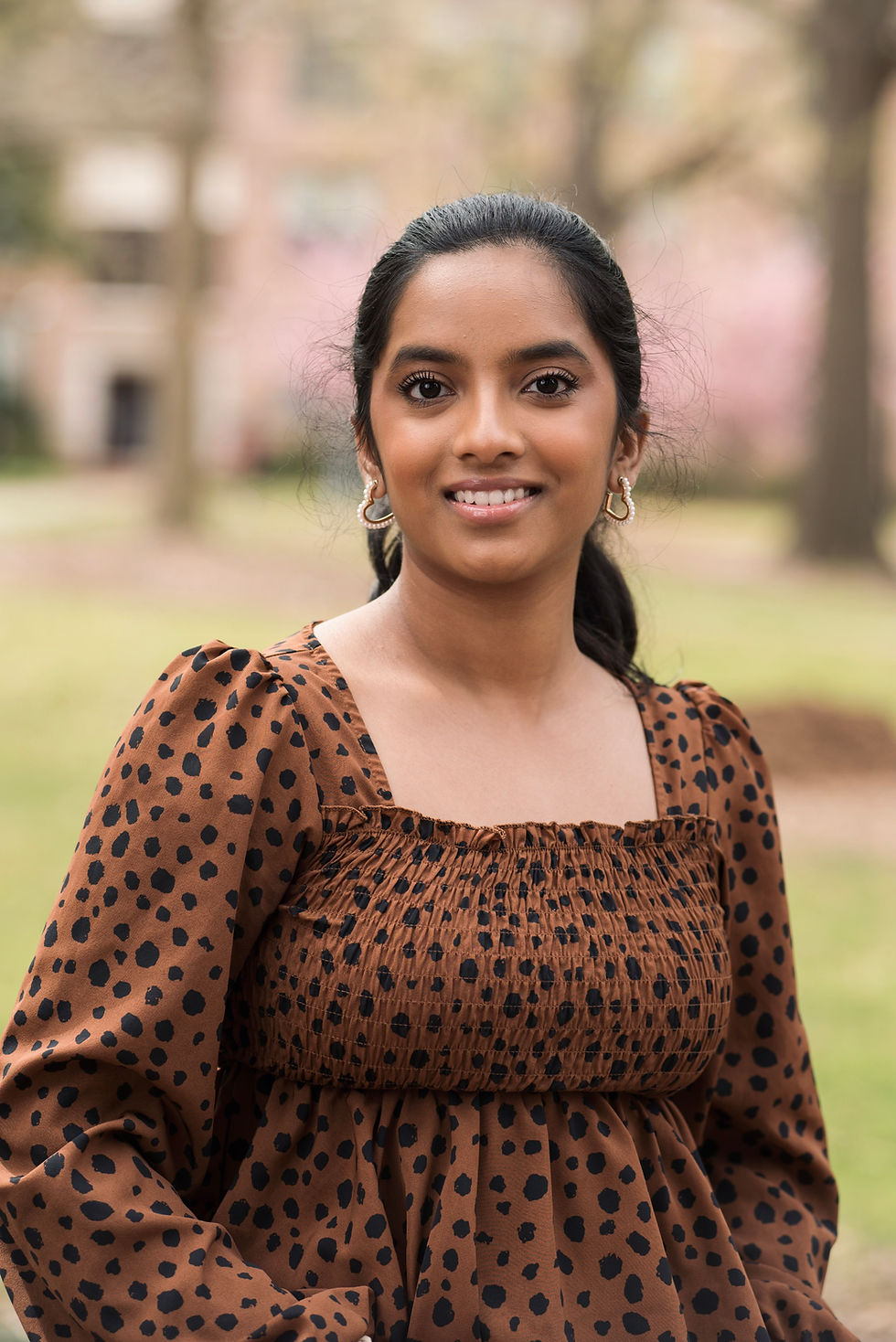
Hi! My name is Sofia Maciel-Seidman, and I am a junior from Long Island, New York, majoring in psychology with a minor in neuroscience. For the Fall 2026 semester, I’m interning at the Carolina Institute for Neurodevelopmental Disabilities (CIND), which provides multidisciplinary clinical services, conducts research, and engages in advocacy to improve the lives of individuals with neurodevelopmental disabilities and their families.
My interest in serving individuals with developmental disabilities began in elementary school when I was an ambassador for a classmate on the autism spectrum. As an ambassador, I ate lunch with my student buddy, played with her at recess, and supported her in the classroom. Seeing the impact of these small acts of support and kindness sparked my passion for serving individuals with developmental or intellectual disabilities. In high school, I founded and ran a free soccer training program designed to make athletics accessible for children with developmental and cognitive challenges in my community, deepening my commitment to inclusive programming.
In college, I continued to work in settings supporting individuals with developmental disabilities, spending my summers as a 1:1 aide for a child with autism in an extended school year program. Helping children achieve their behavioral and academic goals is an extremely rewarding experience, yet it left me with a curiosity about understanding the psychological origins and consequences of developmental outcomes and using that understanding to provide meaningful, evidence-based support for individuals with developmental or intellectual challenges so they could thrive to their fullest potential. I was particularly interested in the evaluation process since I wanted to learn how clinicians piece together developmental information from multiple sources and use clinical insight to formulate diagnoses.
Working as a research assistant in the Family Journeys Co-Lab under Dr. Hussong has furthered my understanding of developmental risk, contextual influences, and resilience. Assisting with study sessions for the Family Connections Study has taught me to adapt my communication style to different developmental stages and build rapport throughout sessions, both of which are key skills that can be transferred to other psychology domains. My experiences in the lab have also provided me with insight into developmental risk pathways and prevention for children of parents struggling with addiction.
These interests led me to pursue the Karen M. Gil Internship program as a developmental psychology intern working with the Carolina Institute for Neurodevelopmental Disabilities. Under the guidance of Dr. Audrey Hagopian, I have been part of various clinic teams, including the School Age Clinic, the Hearing and Development Clinic, the Early Childhood Clinic, and the Angelman Syndrome Clinic. Each clinic is composed of a multidisciplinary team, including speech pathologists, social workers, occupational therapists, education specialists, and audiologists, that works together to conduct assessments and formulate diagnoses. A clinic day lasts multiple hours, with a family coming into the clinic and being seen by multiple specialties in one visit.
My role at the CIND involves assisting the psychologists in the clinic and learning new skills such as scoring developmental assessments, writing the behavioral observation section of case reports, and discussing results during team meetings. I have had the opportunity to learn about developmental and cognitive testing measures, including the Bayley, ADOS, BASC, Vineland, and the Conners. Being able to watch the administration of these measures and learn their scoring systems has provided me with an even deeper understanding of how assessments are used to inform clinical diagnoses and the vast skills critical to administering assessments in a clinical setting.
As a member of an interdisciplinary team, I have gotten to learn firsthand how professionals of various disciplines collaborate to formulate diagnoses and feedback for families of individuals with developmental concerns. Members of the clinic team bounce ideas off of each other, compare scores, discuss potential findings, and utilize a holistic approach when it comes to diagnosing a neurodevelopmental disability, aiming to provide coordinated, family-centered support. One of my favorite parts of clinic days is the team meeting, where halfway through the day each discipline shares their findings thus far and everyone discusses their thoughts based on all of the case information available. It’s a lot like having all of the puzzle pieces laid out on the floor, but then finding ways to work with each other to put all of the pieces together.
I’m also assisting clinicians in writing a research paper about the diagnosis of autism in children with Down syndrome. My role involves pulling data of interest from case reports and deriving descriptive statistics of the data to examine any patterns or trends among the sample. It’s been super interesting to analyze this data, as understanding the background of the sample is helpful in guiding the direction of the research paper.
I am immensely grateful for the opportunity to participate in the Karen M. Gil Internship Program and to work at the Carolina Institute for Neurodevelopmental Disabilities this semester. I am especially thankful to Dr. Audrey Hagopian for welcoming me to the CIND and for her mentorship throughout this semester. I am also grateful to Dr. Steven Buzinski and Richie Gray for making this opportunity possible and for their continued support. I am excited to continue learning from all of the clinicians at the CIND and can’t wait to see what the rest of the semester as a Gil intern entails!


Comments