Beyond the Microscope: Discovering Psychosocial Care at the UNC Community Clinic with Kanushi Navaneethakrishnan
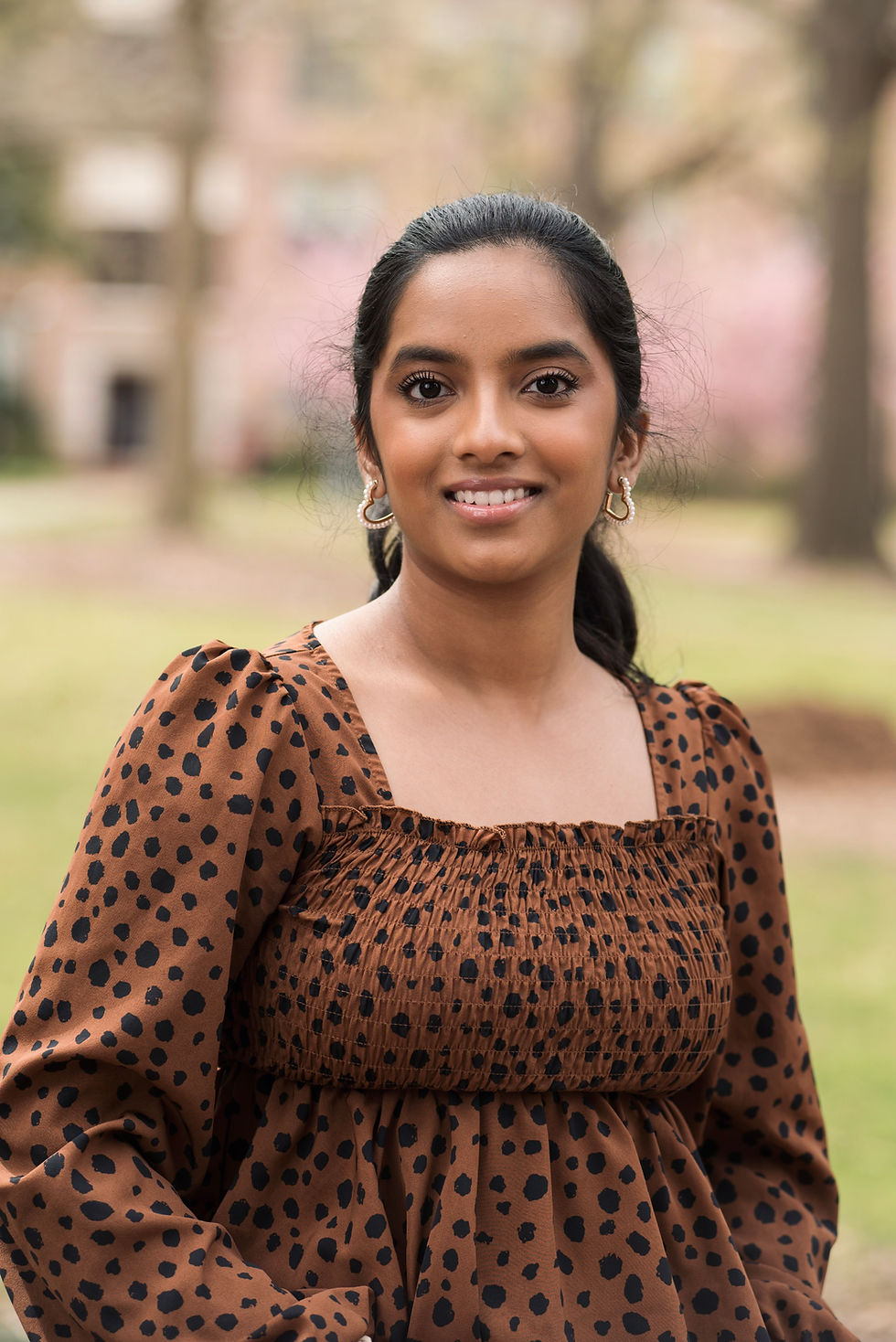
Hi! My name is Kanushi Navaneethakrishnan, and I am a senior from Cincinnati, Ohio double majoring in Neuroscience and Biology on the pre-med track. For the Fall 2026 semester, I am interning at the UNC Department of Psychology and Neuroscience Community Clinic through the Karen M. Gil Internship. The Community Clinic provides psychotherapy and psychological assessment services to UNC and the surrounding community while giving doctoral students in clinical psychology supervised experience working directly with clients.
My interest in the relationship between the brain and behavior first developed through research. In Dr. Juan Song’s lab at UNC, I studied the role of cholecystokinin (CCK) signaling and microglia in Alzheimer’s disease. Much of my work involved examining how changes in CCK signaling affected adult hippocampal neurogenesis and later investigating the role of microglia in these processes. Working with brain tissue, immunohistochemistry, and microscopy allowed me to study Alzheimer’s disease at the level of individual cells and cellular interactions.
Around the same time, I began working as a nursing assistant and caring for patients with Alzheimer’s disease and significant cognitive impairment. It was striking to move from studying the disease through brain tissue and microscopy to caring for people actually living with its effects. I saw how cognitive decline could change the way someone communicated, interacted with family, maintained independence, or navigated something as ordinary as getting through the day. Moving between these two settings changed the kinds of questions I found myself asking. I was still interested in what was happening biologically in the brain, but I became just as curious about what those biological changes meant for the person experiencing them.
My work with the Coalition Against Childhood Cancer (CAC2) introduced me to another part of that picture. As a North Carolina State Lead, I speak with childhood cancer organizations and stakeholders about gaps in resources and support for patients and families. Through these conversations, I began learning more about psychosocial support and how serious illness can affect patients and families far beyond its physical symptoms. I became especially interested in the challenge of connecting people with mental health and supportive resources that fit their individual needs.
My current research in Dr. Kathryn Reissner’s lab has allowed me to think about similar questions in a different context. For my honors thesis, I study changes in microglial morphology following cocaine exposure and withdrawal. While my project examines substance use from a neurobiological perspective, it has also made me think about everything that cannot be captured by looking at cells alone. Understanding substance use disorders requires considering not only biology, but also behavior, environment, mental health, and individual experiences. As these different parts of my undergraduate experiences began to overlap, I became increasingly interested in psychiatry as a field that brings these perspectives together.
I wanted to better understand the psychological side of mental healthcare, which led me to the Karen M. Gil Internship and the UNC Psychology and Neuroscience Community Clinic. Under the guidance of Dr. Jennifer Youngstrom, I have been able to learn about clinical psychology from several different perspectives.
One of my favorite projects has been cataloging recorded therapy training clips used by the clinic. I organize clips based on the therapeutic approaches and techniques being demonstrated so that they can be used as training materials for future clinicians. Before this internship, I had learned about therapeutic approaches primarily through coursework. Watching actual clinical interactions has allowed me to see how therapists communicate with clients, respond to what happens during a session, and adapt therapeutic techniques to the person sitting across from them.
Every Wednesday, I also attend clinic meetings where clinicians and staff discuss cases as well as the logistical issues involved in running the clinic. These meetings have shown me how much collaboration occurs outside of individual therapy sessions. I have enjoyed listening to clinicians think through cases together and seeing how clinical decisions, supervision, scheduling, and other practical considerations all become part of providing psychological care. I have also been helping update the clinic’s disorders recommendations document, which compiles resources and recommendations for different psychological disorders. This project has felt like a natural continuation of what first interested me about resources through CAC2. I have been able to learn about services and tools available for different mental health needs while seeing how clinicians can use resources outside of therapy to support their clients.
Finally, I have had the opportunity to assist with the Therapy EMA research study through the Community Clinic. I help with tracking prospective participants and reviewing relevant screening information for study contact. My previous research experiences have largely involved animal models and quantitative neuroscience, so this project has introduced me to how human-subjects research can operate alongside psychological care. It has been especially interesting to see research and clinical practice exist within the same setting rather than as two separate parts of my experience.
Before the Gil Internship, I had encountered mental health from several different directions: studying the brain, caring for patients, researching substance use, and thinking about access to psychosocial resources. At the Community Clinic, I am beginning to see how many of those pieces come together in practice. Learning from clinical psychologists has also given me a perspective that complements my background in neuroscience and medicine and has strengthened my interest in continuing to explore psychiatry.
I am incredibly grateful to Dr. Jennifer Youngstrom and Joe Friedman for welcoming me into the Community Clinic and for their mentorship throughout this experience. I would also like to thank Dr. Steven Buzinski and Richie Gray for their guidance and support throughout the Gil Internship. I am excited to continue learning from everyone at the Community Clinic throughout the rest of the semester and to see where my growing interest in psychiatry takes me in the future!


Comments